What is Drayage?
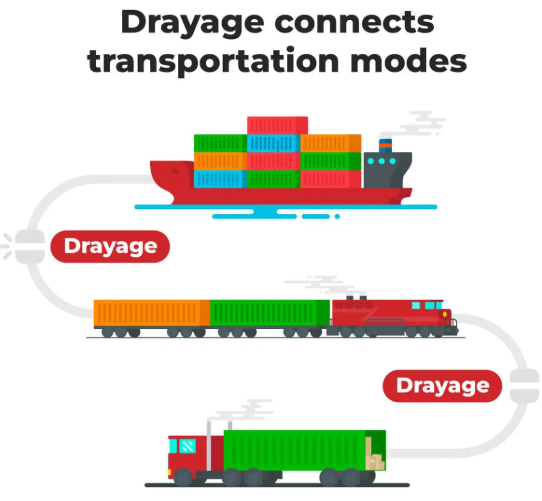
Drayage is a critical component of the logistics supply chain that involves the short-distance transportation of goods, typically from a port, rail yard, or warehouse to another nearby location. The term "drayage" originally referred to the use of a dray—a low, flatbed wagon without sides—to move goods short distances.
In modern logistics, drayage specifically refers to the movement of shipping containers over short distances, usually within the same metropolitan area or between transportation hubs. This service is essential for connecting different modes of transportation, such as moving containers from ships to rail yards, from ports to distribution centers, or between intermodal facilities.
Drayage services are typically measured in miles, with most drayage moves covering distances of 25 to 50 miles, though some can extend up to 200 miles depending on the specific logistics requirements.
Why Drayage Matters
Drayage plays a crucial role in the efficiency of your supply chain. Without proper drayage services, containers can sit idle at ports or rail yards, causing delays and increasing costs. Effective drayage ensures:
- Faster container turnaround times
- Reduced demurrage and detention fees
- Improved supply chain visibility
- Better coordination between transportation modes
- Cost-effective short-haul transportation
Types of Drayage Services
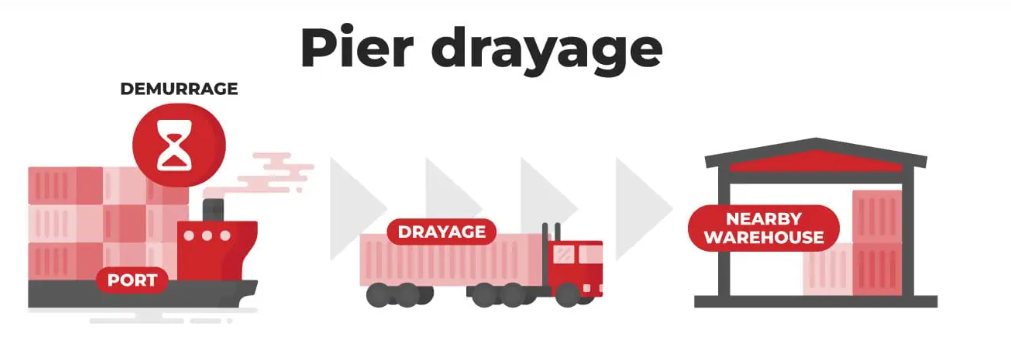
Pier Drayage
Transportation of containers from ocean ports to nearby locations, typically within the port area or to nearby rail yards and distribution centers.
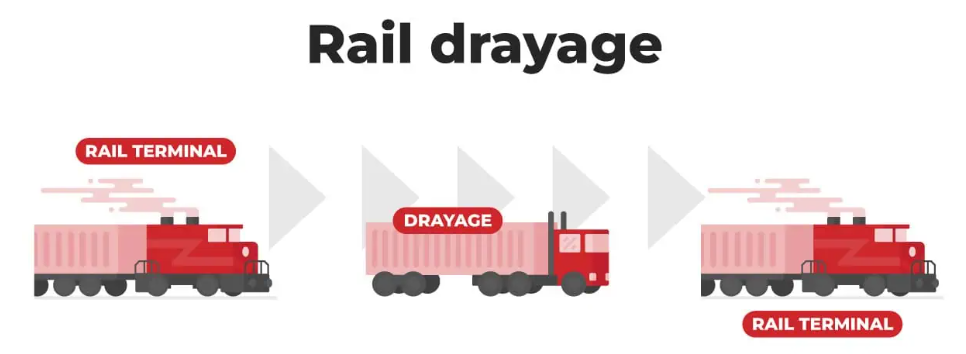
Rail Drayage
Moving containers between rail yards and local destinations, connecting rail transportation with final delivery points.
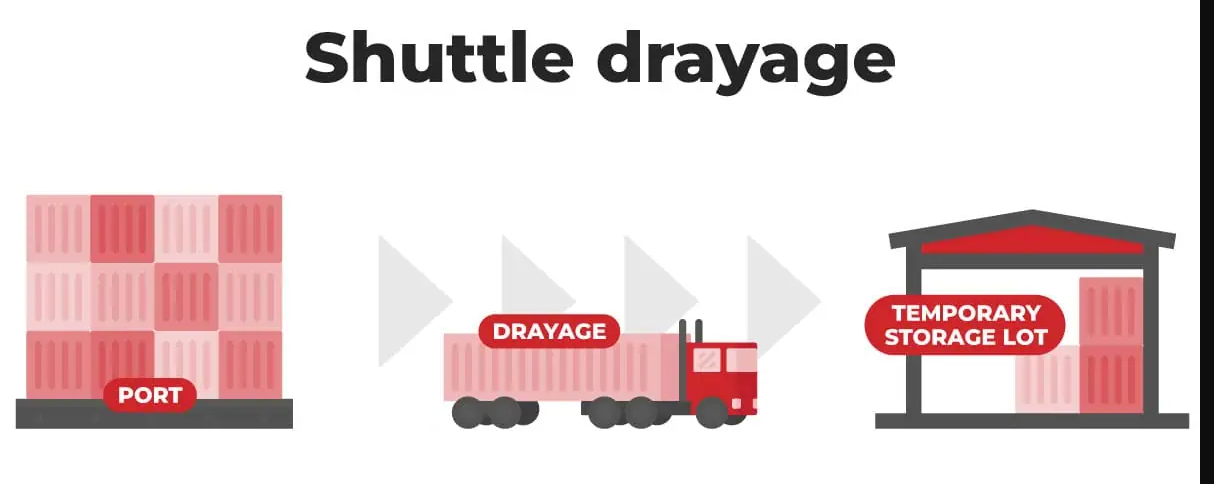
Shuttle Drayage
Moving containers to and from storage facilities or overflow yards when port or rail facilities are at capacity.
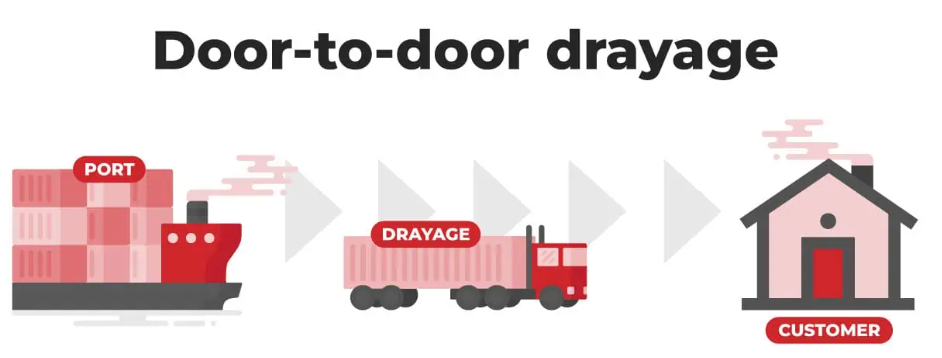
Door-to-Door Drayage
Complete transportation service from origin to final destination, handling all intermediate transfers.
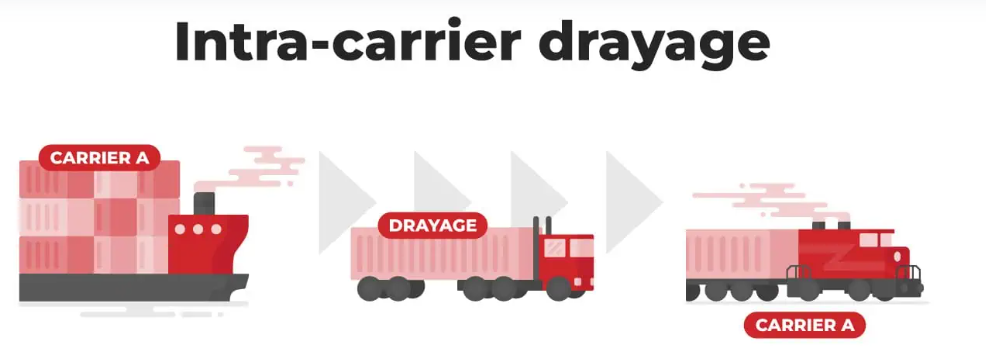
Intra-Carrier Drayage
Moving containers between facilities operated by the same carrier, ensuring seamless internal logistics.
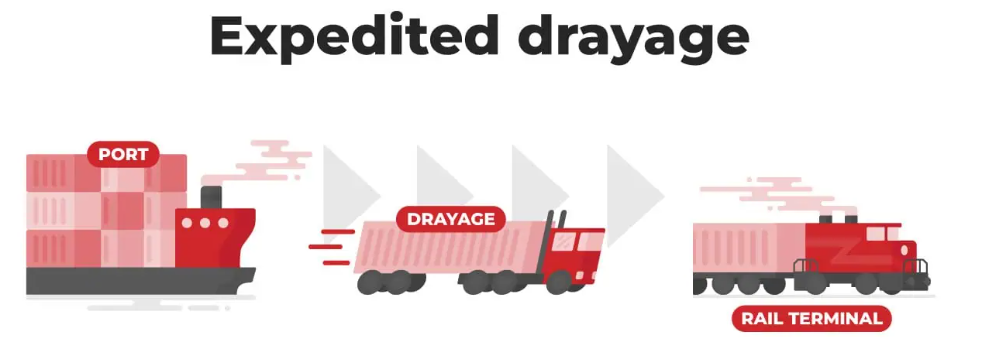
Expedited Drayage
Priority drayage services for time-sensitive shipments requiring immediate transportation.
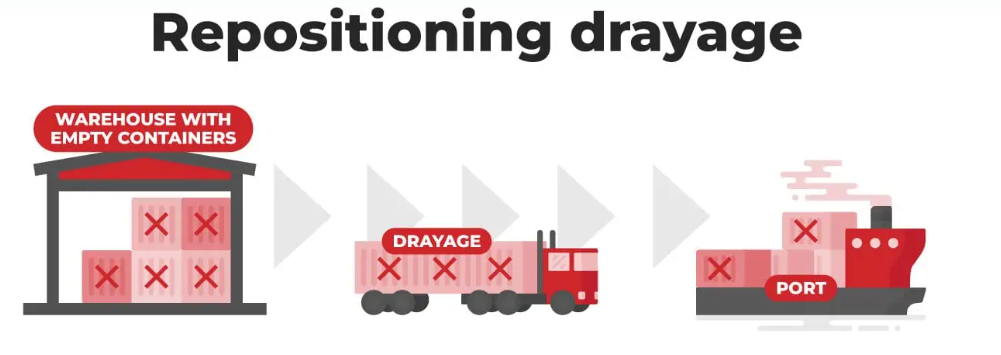
Repositioning Drayage
Moving empty containers to locations where they're needed, optimizing container utilization.
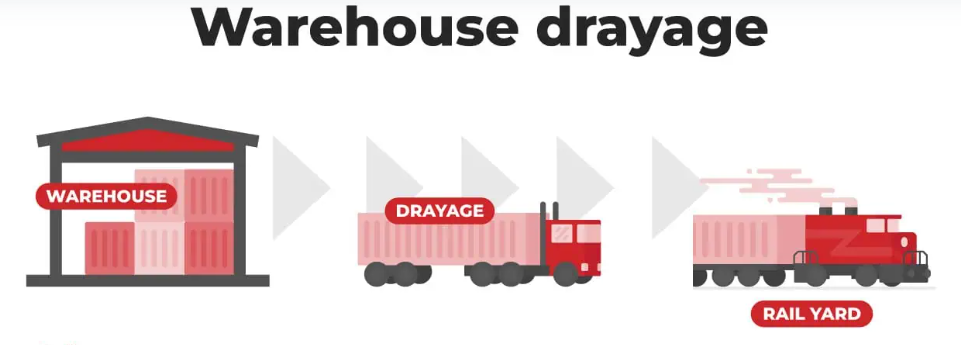
Warehouse Drayage
Transportation between warehouses and distribution centers, facilitating inventory movement.
Understanding Drayage Fees
Why Choose Our Drayage Services
Best Practices for Drayage
Plan Ahead: Schedule drayage services well in advance to secure preferred time slots and avoid rush charges.
Provide Accurate Information: Ensure all container numbers, pickup locations, and delivery addresses are correct to prevent delays.
Monitor Free Time: Track detention and demurrage free time periods to avoid unnecessary fees.
Coordinate with Partners: Maintain clear communication with port authorities, rail operators, and warehouse facilities.
Choose the Right Provider: Select a drayage provider with experience in your specific port or rail facility and a proven track record of reliability.